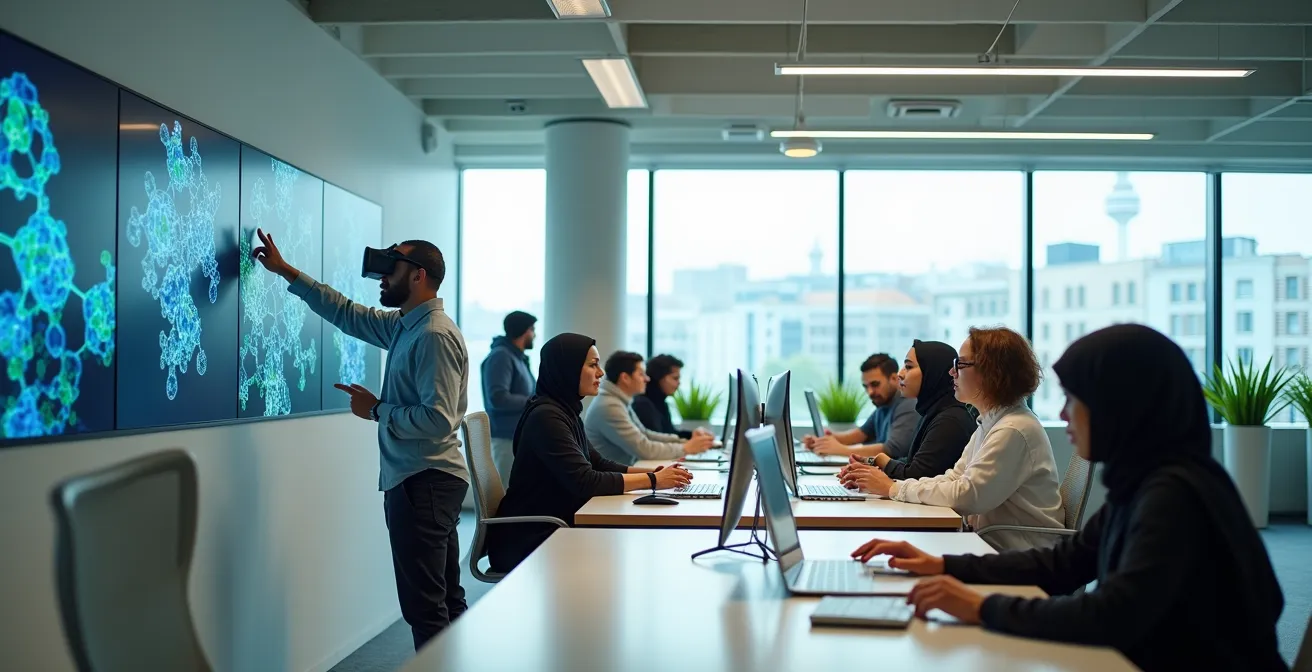
The debate isn’t about replacing hands-on labs; it’s about specializing the learning experience for superior outcomes.
- Virtual labs excel at developing cognitive skills (procedural logic, data analysis) in a consequence-free environment.
- Physical labs remain essential for mastering tactile motor skills (dexterity, equipment handling, troubleshooting).
Recommendation: The most effective curricula don’t choose one over the other. They strategically integrate both, using virtual labs for preparation and conceptual understanding to make precious physical lab time more efficient and impactful.
For any university administrator or science department head, the dilemma is familiar. The “gold standard” of higher education—the physical, hands-on laboratory—is becoming increasingly expensive to maintain, scale, and staff. In the wake of the global shift to remote learning, virtual labs have emerged as a compelling, accessible, and cost-effective alternative. Yet, a nagging question persists: are we sacrificing quality for convenience? Can a student who has never physically calibrated a microscope or performed a titration truly be considered a competent scientist?
The common discourse often frames this as a zero-sum game, debating whether simulations can fully replicate the tangible world. Arguments typically revolve around accessibility, safety in handling virtual hazardous materials, and the obvious cost savings. While these points are valid, they miss the more profound pedagogical shift that is underway. The real potential of virtual labs is not found in their ability to perfectly mimic the physical, but in their unique capacity to teach a different, and arguably more critical, set of scientific competencies.
But what if this ‘either/or’ debate is fundamentally flawed? What if the true power of virtual labs lies not in mimicking physical experiments, but in isolating and developing the ‘cognitive lab skills’ that are often overlooked in a bustling, time-constrained physical lab? This is a move from a mindset of replacement to one of pedagogical specialization. It’s about using the right tool for the right learning objective to create a more well-rounded, analytically sharp scientist.
This article moves beyond the simplistic replacement debate. We will explore how virtual labs serve as a powerful, specialized tool within a modern science curriculum. We will examine their transformative impact on accessibility, dissect the specific skills they cultivate, address their technical limitations head-on, and provide concrete frameworks for integrating them with traditional labs to achieve results that neither method could accomplish alone.
This guide provides a detailed look at how to strategically leverage virtual labs in your curriculum. Below is a summary of the key areas we will cover, from enhancing accessibility to boosting career readiness and overall student engagement.
Summary: The Strategic Role of Virtual Labs in Modern Science Education
- Why Virtual Labs Are a Game Changer for Students with Disabilities?
- How to Integrate Virtual Microscopes into a Biology Syllabus?
- Virtual vs Tactile Skills: What Do Students Lose by Not Touching Equipment?
- The Latency Issues That Ruin Real-Time Virtual Collaboration
- How to Combine Virtual Prep with Physical Lab Time for Best Results?
- How to Integrate Engineering Projects into Biology Classes?
- Why Biotech Careers Offer More Direct Patient Impact Than Academia?
- How EdTech Solutions Are Improving Student Engagement in Remote Classrooms?
Why Virtual Labs Are a Game Changer for Students with Disabilities?
One of the most immediate and undeniable advantages of virtual labs is their power to democratize science education. Traditional labs, by their very nature, present significant physical barriers. A student in a wheelchair may struggle to navigate narrow aisles or reach high benches. A student with fine motor skill impairments may find manipulating delicate glassware frustrating or impossible. Virtual labs dismantle these barriers entirely, creating an inclusive environment where a student’s physical abilities have no bearing on their capacity to learn and experiment.
This isn’t just about physical access; it’s about cognitive and sensory accessibility as well. Virtual environments can be customized to meet diverse needs. Text can be enlarged, color contrasts adjusted for visual impairments, and audio descriptions can narrate visual processes. For students with anxiety or sensory processing disorders, the chaotic and high-pressure environment of a crowded physical lab can be overwhelming. A virtual lab offers a calm, self-paced, and predictable space to focus on the scientific principles at hand, free from external stressors. The ability to use adaptive controllers and other assistive technologies further ensures that the interface itself is not a barrier to participation.
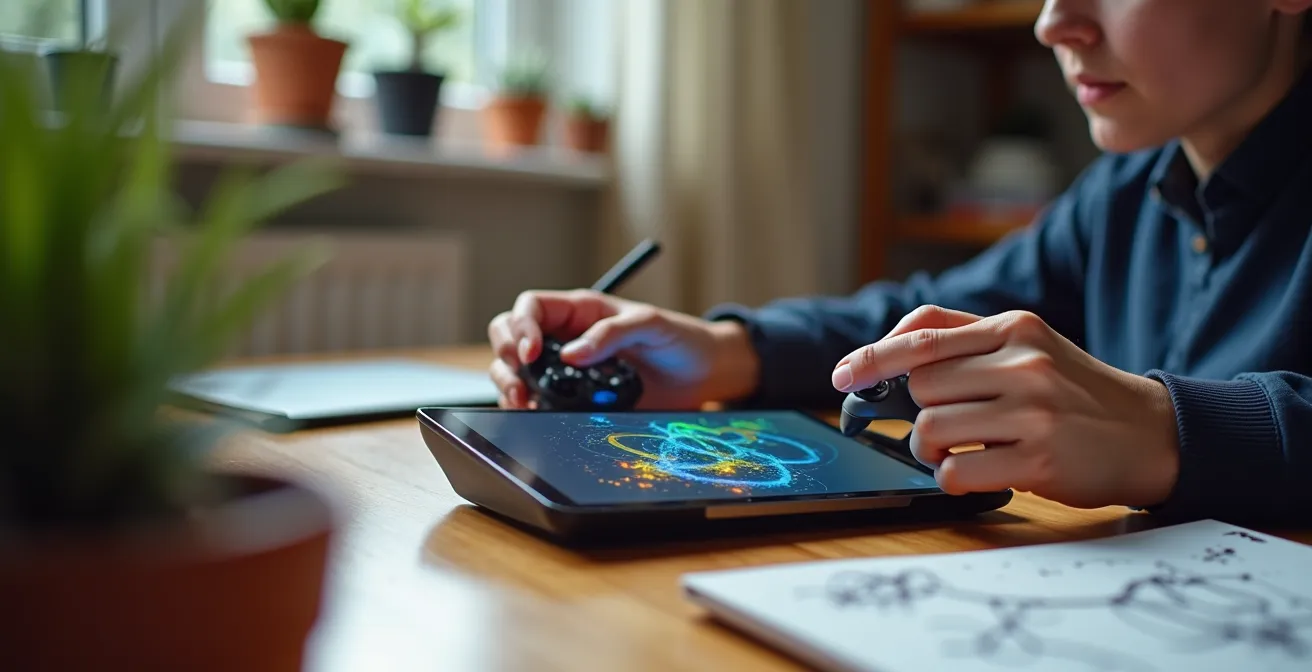
By removing these physical and sensory obstacles, virtual labs enable a far wider range of students to pursue STEM careers. It shifts the focus from a student’s physical limitations to their intellectual curiosity and analytical skills. For a university administrator, this is not just a compliance issue; it is a fundamental step toward building a truly equitable and diverse scientific community, ensuring that the next generation of innovators is drawn from the widest possible talent pool.
Action Plan: WCAG Compliance Checklist for Virtual Labs
- Keyboard Navigability: Ensure all interactive elements are fully operable via keyboard with clear, visible focus indicators for every button, slider, and input field.
- Text Alternatives: Provide comprehensive alt text for all non-text content, including detailed descriptions for complex graphs, 3D models, and experimental results.
- Adjustable Timing: Implement options to pause, extend, or disable time limits for all timed activities and experiments to accommodate various processing speeds.
- Color Contrast: Design all user interface elements and instructional text with a color contrast ratio of at least 4.5:1 to ensure readability for users with low vision.
- Screen Reader Compatibility: Use proper ARIA (Accessible Rich Internet Applications) labels and roles to ensure all interactive components and dynamic content updates are correctly announced by screen readers.
- Multiple Task Pathways: Offer several different methods to complete the same experimental task, such as drag-and-drop, keyboard commands, or clickable menus, to suit different motor abilities.
How to Integrate Virtual Microscopes into a Biology Syllabus?
The microscope is a cornerstone of biology education, but teaching its use effectively is a notorious challenge. Students often spend more time wrestling with the physical instrument—learning to focus, adjust lighting, and prepare slides—than they do observing biological structures. Virtual microscopes offer a powerful solution by separating the learning of mechanical skills from the practice of scientific observation. A well-integrated syllabus can leverage this to create a more efficient and effective learning ladder.
The process begins with the virtual. In the first few weeks, students use a virtual microscope simulation to master the functions: identifying parts, understanding coarse and fine adjustment, and switching objectives. They can work with a library of perfect, pre-focused digital slides of rare or difficult-to-prepare specimens. This removes the initial frustration and allows them to immediately focus on identifying cellular structures and understanding what they are seeing. This approach has shown significant success in hybrid models. For instance, a study at North Carolina A&T University found that 57.2% of students favored a hybrid approach, where they first mastered microscope functions on digital slides before handling physical equipment.
Once this conceptual and operational foundation is built, students transition to the physical lab. Now, their time is not wasted on basic mechanics. They arrive with the confidence and knowledge to handle the real instrument, prepare their own slides, and troubleshoot common issues like air bubbles or poor staining. The physical lab becomes a place for honing fine motor skills and dealing with the unpredictability of real-world samples, rather than a frustrating introduction to a complex tool. The comparison between the two modalities clearly shows how they serve different pedagogical purposes.
The table below, based on an analysis of open educational resources, highlights the distinct advantages each tool brings to the curriculum.
| Feature | Virtual Microscope | Physical Microscope |
|---|---|---|
| Sample Availability | Unlimited rare/dangerous specimens | Limited to available slides |
| Image Quality | Perfect, pre-captured images | Variable, skill-dependent |
| Cost per Student | $5-50/year subscription | $500-3000 equipment cost |
| Time to Mastery | 2-3 weeks | 4-6 weeks |
| Quantification Tools | Built-in measurement software | Requires additional equipment |
Virtual vs Tactile Skills: What Do Students Lose by Not Touching Equipment?
This is the central anxiety for many educators and administrators: by removing the hands-on element, are we creating a generation of scientists who are brilliant in theory but clumsy in practice? It’s a valid concern. There is undeniably a form of knowledge—a tactile intelligence—that comes from the physical manipulation of equipment. The feel of a pipette’s plunger, the subtle resistance of a focus knob, or the practiced motion of streaking an agar plate are skills that a mouse click cannot replicate.
However, framing this as a “loss” is where the debate goes wrong. Instead, it should be framed as a specialization of skills. As one expert in the field explains, we must distinguish between two types of laboratory competence. In a study for California State University, Dr. Robert A. Desharnais proposed a new framework:
Frame virtual labs as superior for developing ‘cognitive lab skills’ (procedural logic, theoretical understanding, data interpretation) while physical labs develop ‘motor lab skills’ (dexterity, muscle memory). The goal is to choose the right tool for the right learning objective.
– Dr. Robert A. Desharnais, California State University MERLOT Virtual Labs Study
This is the crux of the argument. Virtual labs are a superior environment for mastering cognitive lab skills. They force students to think through the *why* of each step in a procedure without being distracted by the *how* of manipulating equipment. They can run an experiment ten times in an hour, focusing solely on how changing one variable affects the outcome. Physical labs, conversely, are the ideal training ground for motor lab skills. They teach dexterity, troubleshooting of real-world equipment malfunctions, and the situational awareness required in a shared physical space. The two are not in competition; they are complementary.
When used together, the impact is magnified. Evidence suggests that students learn far more effectively when virtual and physical methods are combined. Research has shown that students learn twice as much when virtual and physical labs are combined compared to using either method alone. This hybrid approach allows students to build a strong theoretical and procedural foundation in a safe, repeatable virtual space before applying and honing their physical skills in a real-world lab setting.
The Latency Issues That Ruin Real-Time Virtual Collaboration
While virtual labs offer immense benefits, a purely optimistic view ignores a critical technical hurdle: latency. For pre-rendered simulations where a student interacts with a self-contained program, this is a non-issue. But for remote labs—where students control real, physical equipment over the internet—and for real-time collaborative projects, network delay can render the experience useless. A lag of even a few hundred milliseconds can make fine-tuning a microscope or performing a precise real-time titration an exercise in pure frustration.
The acceptable level of latency depends entirely on the task at hand. Simply collecting data from a sensor that updates every few seconds can tolerate a delay of up to a full second (1000ms). However, tasks requiring delicate, real-time motor control have a much lower tolerance. As the table below illustrates, different lab activities have dramatically different requirements, and failing to account for this can doom a remote lab implementation from the start.
| Lab Activity Type | Acceptable Latency | Impact of Delay |
|---|---|---|
| Simulated experiments | Unlimited (pre-rendered) | No impact |
| Data collection | 500-1000ms | Minimal |
| Remote microscope control | <100ms | Critical for fine adjustments |
| Real-time titration | <50ms | Makes precise control impossible |
| Collaborative annotation | 200-500ms | Manageable with turn-based control |
Acknowledging this challenge is the first step to overcoming it. This is where a balanced, skeptical-but-hopeful perspective is crucial. Instead of abandoning the concept of remote labs, successful programs design their experiments *around* latency. This involves a combination of smart software design and realistic pedagogical goals. By understanding the technical limitations, institutions can build robust and effective remote lab experiences that play to the strengths of the technology rather than being defeated by its weaknesses.
Your Roadmap: Strategies to Mitigate Virtual Lab Latency
- Asynchronous Queuing: Implement a system where non-time-critical commands (e.g., “move to sample B”) are sent to a queue and executed sequentially, with confirmation sent back, rather than requiring a live connection.
- Predictive UI: Use predictive user interface elements that show the expected outcome of an action instantly on the student’s screen, while the actual remote command is processed in the background.
- Prioritize Communication Channels: For collaborative work, prioritize low-latency audio and chat channels for communication over high-bandwidth video streams of the equipment itself, which can be sent at a lower frame rate.
- Edge Computing Deployment: Deploy edge computing servers or network relays geographically closer to user clusters to reduce the physical distance data has to travel, thereby lowering round-trip time.
- Turn-Based Control: For collaborative sessions involving a single instrument, design a clear “turn-based” control system where only one user has active control at a time, preventing conflicting commands.
- Local Caching: Cache frequently used simulation data, large datasets, and interface assets locally on student devices to minimize the amount of information that needs to be transferred over the network during a session.
How to Combine Virtual Prep with Physical Lab Time for Best Results?
The most sophisticated and effective use of virtual labs in higher education is the “flipped lab” model. This approach completely rethinks the purpose of both virtual and physical time. Instead of viewing them as separate or competing entities, it integrates them into a seamless learning sequence where each component is used for what it does best. The result is a dramatic increase in the efficiency and educational value of expensive, limited physical lab resources.
In a flipped lab model, all preparatory work is front-loaded into the virtual environment. Students use simulations and interactive videos to learn the theory behind an experiment, understand the Standard Operating Procedures (SOPs), practice the multi-step process, and even perform preliminary data collection with ideal datasets. They arrive at the physical lab already knowing exactly what they are supposed to do and why. This model has been successfully implemented at institutions like the University of Central Florida (UCF), which re-invested in a collection of STEM-based videos and demonstrations to prepare students before they ever set foot in a lab.
This preparation transforms the role of the physical lab. It is no longer a place for introductory lectures or fumbling with basic procedures. Instead, it becomes a high-value space dedicated exclusively to hands-on practice, troubleshooting unexpected results, and collaborative problem-solving. Instructors and teaching assistants can devote their time to higher-order questions and individualized coaching, rather than repeating basic instructions. The economic argument is equally compelling; by making physical lab time more efficient, institutions can serve more students with the same resources. In fact, some reports show that universities using iXR Labs’ hybrid approach report a 52% cost reduction in lab operations, primarily by optimizing the use of equipment and consumables.
How to Integrate Engineering Projects into Biology Classes?
One of the most exciting, and often overlooked, benefits of virtual lab platforms is their ability to foster unprecedented interdisciplinary collaboration. In a traditional university setting, a biology student and an engineering student might never cross paths, let alone work on a project together. Their departments are in different buildings, their schedules are misaligned, and their equipment is incompatible. Shared virtual environments erase these logistical barriers completely.
Imagine a biomimicry design challenge. Biology students could use virtual microscopy and data analysis tools to study the locomotion of a starfish or the fluid dynamics of a shark’s skin. They can then share this complex dataset and their observations directly on a shared virtual platform. Engineering students, accessing the exact same data, can then use MATLAB, Simulink, or CAD software to design a robot or surface that mimics these biological principles. A successful example of this is the collaboration between Quanser and MathWorks, which created a virtual environment where biology and engineering students from different universities collaborated remotely to design robots based on biological movements.
This type of project is simply not feasible in a purely physical context. The virtual platform acts as a common language and shared workspace, allowing students from disparate fields to collaborate asynchronously and test their integrated designs in a simulated environment. This not only prepares them for the highly interdisciplinary nature of modern R&D but also sparks a level of creativity and innovation that is rarely seen in siloed undergraduate courses. For administrators, this represents a high-impact, low-cost way to create cutting-edge educational experiences that break down departmental walls.
Framework: An Interdisciplinary Virtual Lab Project
- Problem Identification (Weeks 1-2): Biology students use virtual microscopy and analysis tools to identify and characterize a specific biological problem or mechanism.
- Data Sharing (Weeks 2-3): The biological dataset and initial findings are uploaded to a shared virtual platform, where engineering students can access and analyze them.
- Solution Design (Weeks 3-4): Engineering students create initial CAD models or control algorithms for a proposed solution within a simulation software integrated with the platform.
- Collaborative Testing (Weeks 4-5): Both teams meet in the shared virtual environment to test the prototype against the initial biological parameters, identifying points of failure or success.
- Iterative Redesign (Weeks 5-6): Using analytics and performance data from the virtual lab, the engineering team refines the design, with continuous feedback from the biology team.
- Joint Presentation (Week 7): The interdisciplinary team delivers a final virtual presentation using 3D models, simulation results, and data to demonstrate their solution.
Why Biotech Careers Offer More Direct Patient Impact Than Academia?
For science students weighing their future, the choice between an academic research path and a career in the biotech industry often comes down to a question of impact. While academic research is the foundation of all discovery, its path to affecting patient lives can be long and indirect. A career in biotechnology, however, offers a more direct line from the lab bench to the patient’s bedside, and virtual labs are becoming an essential tool for preparing students for this transition.
The biotech industry operates under a strict set of regulations known as Good Manufacturing Practices (GMP) and relies heavily on standardized procedures and quality control. These are skills rarely taught in a university’s discovery-focused academic labs. Specialized virtual lab modules, like those developed by Labster, are filling this critical gap. They offer simulations focused on the “Biotech Industry,” allowing students to virtually experience the entire pipeline, from following SOPs and operating automated equipment to navigating simulated FDA approval processes. This gives them a significant head start and makes them far more attractive candidates for industry roles.
The focus, timeline, and ultimate reach of the work in these two fields are fundamentally different. A successful academic paper might be read by hundreds and influence future research over decades. A successfully developed drug in the biotech industry can directly treat millions of patients within a decade. Virtual training allows students to understand and practice the skills needed for that large-scale, high-stakes environment, bridging the gap between theoretical knowledge and industrial application.
This table compares the two career paths, highlighting why virtual lab training is becoming so crucial for students aiming for the biotech sector.
| Aspect | Biotech Industry | Academic Research |
|---|---|---|
| Patient Reach | Millions through scaled production | Hundreds through publications |
| Time to Impact | 5-10 years (drug to market) | 15-20 years (research to application) |
| Virtual Training Focus | GMP, automation, regulatory | Discovery, methodology, theory |
| Typical Virtual Lab Skills | High-throughput screening | Experimental design |
Key Takeaways
- Virtual labs are not just a substitute but a specialized tool for developing ‘cognitive lab skills’ like procedural logic and data analysis.
- The most effective science curricula use a “flipped lab” model, where students learn theory and procedure virtually to maximize precious hands-on time in physical labs.
- Accessibility is a primary driver, with virtual labs removing physical and geographical barriers for students with disabilities and those in remote locations.
How EdTech Solutions Are Improving Student Engagement in Remote Classrooms?
Perhaps the most powerful, and initially most surprising, outcome of well-designed virtual labs is a dramatic increase in student engagement. In a world of digital distraction, holding a student’s focus is a constant battle. Yet, reports from universities implementing modern, AI-powered virtual labs indicate a massive leap in participation. Some institutions even claim as much as a 250% increase in student engagement compared to traditional remote assignments like reading or watching videos.
This heightened engagement stems from several factors. The interactive, game-like nature of many simulations is inherently more compelling than passive learning. Furthermore, adaptive learning pathways can adjust the difficulty in real-time based on a student’s performance, preventing both boredom and frustration. As one student with ADHD noted in a Fall 2023 survey on Labster’s effectiveness, the clear instructions and visible results make it “much more engaged than reading or regular assignments.” This personalized pacing keeps students in a state of productive challenge.
However, the deepest source of engagement comes from a profound psychological shift that virtual labs enable. Dr. Melody Esfandiari, a researcher who studied their implementation in high school, identified the core reason:
The most powerful engagement feature of virtual labs is the ability to fail without consequence. This psychological safety encourages curiosity, experimentation, and risk-taking—key drivers of genuine scientific interest—that are often suppressed in a high-stakes physical lab.
– Dr. Melody Esfandiari, St. John Bosco High School Virtual Labs Research Study
This is the ultimate benefit. In a physical lab, the fear of breaking expensive equipment, wasting costly reagents, or getting a bad grade for a “failed” experiment can stifle true scientific inquiry. The virtual lab creates a sandbox for curiosity. Students are free to ask “what if?”, to push variables to their limits, and to make mistakes. It is in these moments of consequence-free failure that the deepest, most lasting learning occurs. It transforms students from passive followers of instructions into active, engaged, and genuinely curious scientific thinkers.
For any educational leader, the path forward is clear. The question is no longer *if* virtual labs can replace physical ones, but *how* to strategically integrate them to create a curriculum that is more accessible, more efficient, and, most importantly, more effective at fostering the critical thinking skills that define a modern scientist. Evaluating your current curriculum for opportunities to implement a flipped lab model is the logical first step in this evolution.